
.svg)

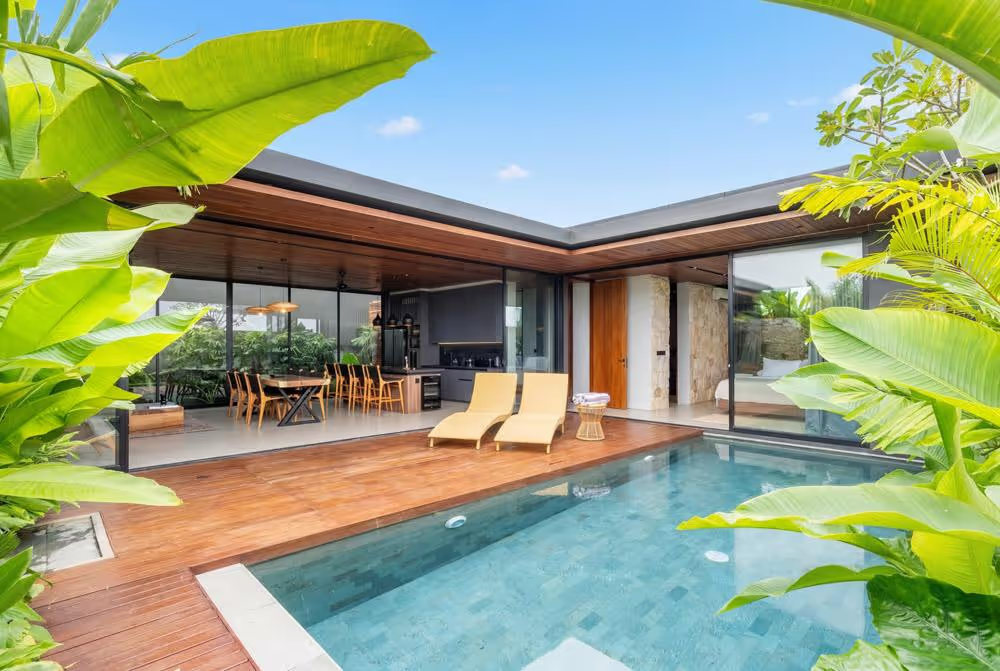
More foreign buyers keep asking the same thing: why are investors buying Bali property right now? If you are weighing your first Bali property investment from Australia, the US, the UK, or Europe, you want honest answers, not hype.
This guide covers the real drivers of demand and the returns you can expect after tax and costs. It also explains the legal ways foreigners can buy and the risks worth planning for.
We are Uluwatu Property, a Bali real estate team with more than 10 years on the ground in Uluwatu and the wider Bukit Peninsula. We keep the language plain and define every legal and tax term the first time it appears.
By the end, you will know why the market is busy and how to start safely, even from abroad.
Why Investors Are Buying Bali Property Right Now
Investors are buying Bali property for a rare mix of reasons. The main ones are strong year-round rental demand, attractive yields, a weaker Indonesian Rupiah, and limited land in prime areas.
Bali also has no true low season, so occupancy stays steadier than in many holiday markets.
The demand is backed by official numbers. In 2025, Bali recorded 6,948,754 direct foreign tourist arrivals, up 9.72 percent from 2024, with Australia the largest source market at 23.44 percent, according to the BPS Bali tourism statistics.
So why are investors buying Bali property? The rest of this article is the honest, numbers-first breakdown behind that headline. We will show the good and the caveats, so you can judge the market for yourself.
Key Takeaways
- Demand is real and documented: Record foreign arrivals, tracked by Indonesia's official statistics office, support rental demand across the year.
- You buy through leasehold or a company, not freehold: Foreigners cannot own freehold land, but clear legal routes exist.
- Judge yields after tax and costs: Market-reported gross yields look strong, but your true return is the after-cost, after-tax number.
- Non-residents pay more rental tax: Non-residents face 20% withholding versus 10% for tax residents, sometimes reduced by treaty.
- Entry is lower than many expect: Well-located leasehold villas can start from around USD 80,000.
- Uluwatu and the Bukit are early-mover areas: Scarce coastal land supports long-term value.
- Due diligence decides the outcome: Title, zoning, permits, taxes, and access checks separate a good deal from a costly one.
What "Bali Property Investment" Actually Means
Bali property investment is not really about buying a villa. You are buying a use case: a holiday home, a rental business, long-term capital growth, or a place to live.
A villa is simply a standalone house, often with a private pool, that you can live in or rent to travellers. But two identical villas can be very different investments depending on your goal.
That is why the thesis should come before the property. Decide first what you want the asset to do, then choose the structure and location that fit. Our Bali property returns and risks guide walks through how those goals map to real outcomes.
Two words you will see everywhere are leasehold and freehold. Leasehold means you hold the right to use a property for a fixed number of years. Freehold means full, permanent ownership of the land.
The Real Reasons Demand Is Strong
Record, Year-Round Tourism
Those arrivals from Australia and other Western markets matter if you plan to host travellers who book and pay in strong currencies. Steady arrivals from familiar markets make forecasting occupancy easier.
Because visitors arrive across all twelve months, Bali has no true low season. In our experience, a well-located villa can hold occupancy across more of the year than a seasonal beach market.
For you, that means fewer empty weeks and a steadier income line, as long as the property and management are right.
A Weaker Rupiah Boosts Buying Power
Currency plays a quiet but big role. When the Indonesian Rupiah is weak against your home currency, your money simply buys more Rupiah, and therefore more property.
For a buyer holding Australian or US dollars, British pounds, or euros, that can lower the effective entry price. Some quality leasehold villas start from around USD 80,000.
Currency is a tailwind, not a promise. Exchange rates move both ways, so treat a favourable rate as a bonus, not the core reason to buy.
Limited Land in Prime Areas
Prime coastal land is finite. On the Bukit Peninsula and along the Canggu corridor, the best clifftop and near-beach plots are limited. Spatial planning rules also cap how much can be built.
Scarcity in these zones supports long-term value, because supply cannot easily catch up with demand. This is the heart of the early-mover case for the Bukit.
We specialise in this corner of the island. You can explore the case for investing in Uluwatu in more detail.
Rental Yields and ROI: What the Numbers Really Show
First, three quick definitions. Gross yield is your yearly rental income divided by the purchase price. Net yield is what remains after costs like management, maintenance, and tax.
ROI, or return on investment, is your profit measured against what you put in.
Global Property Guide's 2026 research puts Bali villa rental yields at 4.00% to 7.59% gross, with a city average of 5.80%. That average is the weakest of the five markets the source covers. These are gross figures, so eye-catching double-digit numbers in marketing are top-performer gross figures, not a net baseline.
Your real return depends on the numbers behind the brochure. Occupancy, nightly rates, management fees, and repairs all pull the net figure down from the gross.
That is why we always model returns and downside risks together before you commit. A property that looks great on a gross yield can look ordinary once tax and costs are counted.
How Foreign Investors Can Legally Buy Property in Bali
Here is the rule that shapes everything. Under Indonesia's Basic Agrarian Law (Law No. 5 of 1960), Hak Milik (freehold title) belongs exclusively to Indonesian citizens.
In plain terms, foreign investors cannot hold freehold title in Indonesia.
The good news is that this is normal, and several legal, well-established routes let foreigners buy and earn. Our guide to buying in Bali legally covers the safe process step by step. Avoid nominee arrangements, where title sits in a local person's name for you, because they are unenforceable under Indonesian law.
The table below compares the main structures in plain language.
HGB and Hak Pakai can run for an initial term plus renewals totalling up to a theoretical 80 years (30 + 20 + 30). These renewals are subject to regulatory compliance and approval at each stage, so they are not automatic.
Leasehold (Hak Sewa)
Hak Sewa, or leasehold, means you rent the right to use a property for a set number of years, often 25–30, with renewal options. It carries a lower upfront cost than a company structure.
Leasehold suits holiday homes and single rental villas. You can also sell the remaining years on the lease to the next buyer.
Lease quality matters, so we check the extension terms and the landowner's title carefully. You can read more about leasehold property in Bali before you compare options.
Hak Pakai (Right to Use)
Hak Pakai is a registered right to use and occupy land, granted to qualifying foreigners who hold a valid stay permit. It is a right to use, not freehold ownership.
Because it is tied to your personal permit, it works best for a home you plan to live in. It is less suited to most income-focused villa products.
PT PMA With HGB (Company Ownership)
A PT PMA is a foreign-owned Indonesian company. It can hold HGB, which is the right to build and use land, making it the closest route to ownership for foreigners.
This structure fits multiple units, a rental business, or development. It also carries more setup and running obligations, so the income needs to justify the effort.
The capital rules recently changed. The minimum paid-up capital for a PT PMA is now at least Rp 2.5 billion (~ USD 150,000), per PT PMA minimum capital rules.
That figure comes from BKPM Regulation 5/2025, and BKPM is Indonesia's investment coordinating board. This paid-up capital is considered a part of the Rp 10 billion total investment plan.
If this route fits your goals, our guide to setting up a PT PMA explains what to expect.
Taxes and Transaction Costs: What Buyers Actually Pay
Taxes and fees are where returns quietly shrink, so plan for them early. The two that surprise foreign buyers most are the buyer's acquisition tax and the rental income tax.
BPHTB is the Land and Building Rights Acquisition Duty, a one-time tax the buyer pays when title transfers. Leasehold buyers usually avoid it, because a lease is a contract, not a registered title transfer.
The rental income tax depends on your tax residency. According to PwC's Indonesia rental income tax summary, tax residents pay a 10% final tax on income from rentals of land and/or building.
Most foreign investors are non-residents, and the math is different. Global Property Guide reports nonresidents' rental income is taxed at a final withholding rate of 20% of gross income, per its Indonesia transaction costs data. The same source lists BPHTB at 5% and roundtrip costs of 9.5–14%.
That 20% rate can drop, often to about 10%, if a double-taxation treaty applies. The relief is not automatic.
The table below summarises the main costs.
Notary and PPAT (the land deed official) fees, due diligence, and any agent fees sit inside that roundtrip range. Our Bali property taxes guide breaks the numbers down for foreign buyers.
Best Areas in Bali for Property Investment
Match the area to your goal, not the other way around. Each zone has a different mix of price, rental demand, and lifestyle.
- Uluwatu, Bingin, and Ungasan (Bukit Peninsula): Surf, clifftop ocean views, and scarce land, with a strong early-mover case.
- Canggu, Berawa, and Pererenan: Busy rental demand and a large digital-nomad crowd.
- Seminyak and Umalas: Established, central, and popular with returning visitors.
- Sanur and Ubud: Steadier and wellness-led, often quieter than the west coast.
Our home turf is the Bukit, but we help buyers across the island. For a deeper tour of neighbourhoods, see the best areas to invest in Bali.
The Real Risks (and How to Manage Them)
No honest guide skips the downside. Most Bali property risks are manageable, but only if you check for them before you sign.
- Legal and title problems: Weak leases or unclear ownership can undo a deal. We verify title and lease terms first.
- Zoning and licensing: A villa in a non-tourism zone may not be legally rentable. We confirm zoning and permits.
- Oversupply in generic villas: Cookie-cutter villas in crowded pockets compete on price. Location and design protect your income.
- Hidden costs: Fees, taxes, and estate charges add up. We map the full cost before you commit.
- Over-reliance on short-term rental: If nightly bookings dip, a property that also works as a long-term rental gives you a fallback.
Good due diligence covers title, zoning, permits, taxes, and road access. We provide a clear report before you sign, so the decision is yours with full information.
How to Get Started (Including From Abroad)
The path is simpler than it looks when you take it one step at a time.
- Set your thesis and budget: Decide whether you want lifestyle, rental income, or growth, and what you can invest.
- Choose the area and property: Match the location and villa type to that goal.
- Pick a legal structure: Choose leasehold, Hak Pakai, or a PT PMA based on your plan.
- Run due diligence: Check title, zoning, permits, taxes, and access before any payment.
- Complete the purchase: In our own Bukit deals across Uluwatu, Bingin, and Ungasan, closings typically take 30 to 60 days once you choose a property.
- Set up management: Arrange rental management so the income actually shows up.
You do not need to be in Bali to do this. We support remote buyers with full legal support and video walkthroughs, and we keep you updated at every step.
FAQ
Is Bali property a good investment for you?
It can be, thanks to strong tourism demand and attractive market-reported yields, but your real result depends on location, structure, and the after-tax, after-cost numbers.
Can you buy property in Bali as a foreigner or US citizen?
Yes, you cannot own freehold, but you can legally use leasehold (Hak Sewa), Hak Pakai, or a foreign-owned PT PMA company holding HGB title.
What rental yield can you realistically expect?
Global Property Guide research puts Bali villa gross yields around 4.00%–7.59%, averaging about 5.80%. Treat that as an estimate and judge each property on its net return.
As a buyer, what is the difference between leasehold and freehold?
Leasehold gives you the right to use a property for a fixed term, while freehold is permanent land ownership that is reserved for Indonesian citizens.
What taxes will you pay as a foreign investor?
Buyers of titled property pay 5% BPHTB, while rental income is taxed at 10% for residents or 20% for non-residents, which a treaty may reduce.
Conclusion
So, why are investors buying Bali property? The fundamentals are real: record tourism, no true low season, a favourable currency, and scarce prime land. The returns can be attractive, but the honest version is judged after tax and costs, not a brochure headline.
The legal routes are clear once you understand leasehold, Hak Pakai, and the PT PMA path. The risks are manageable with proper due diligence and the right local partner.
That is where we come in. We bring more than 10 years of on-the-ground knowledge in Uluwatu and across Bali. We help you buy for both living and investment, with clarity at every step.
Contact Us Today
Ready to talk about listings, due diligence, or buying from abroad? We are here to guide you from first question to signed deal. Contact us today. road? We are here to guide you from first question to signed deal. Contact us today.


.avif)
