
.svg)

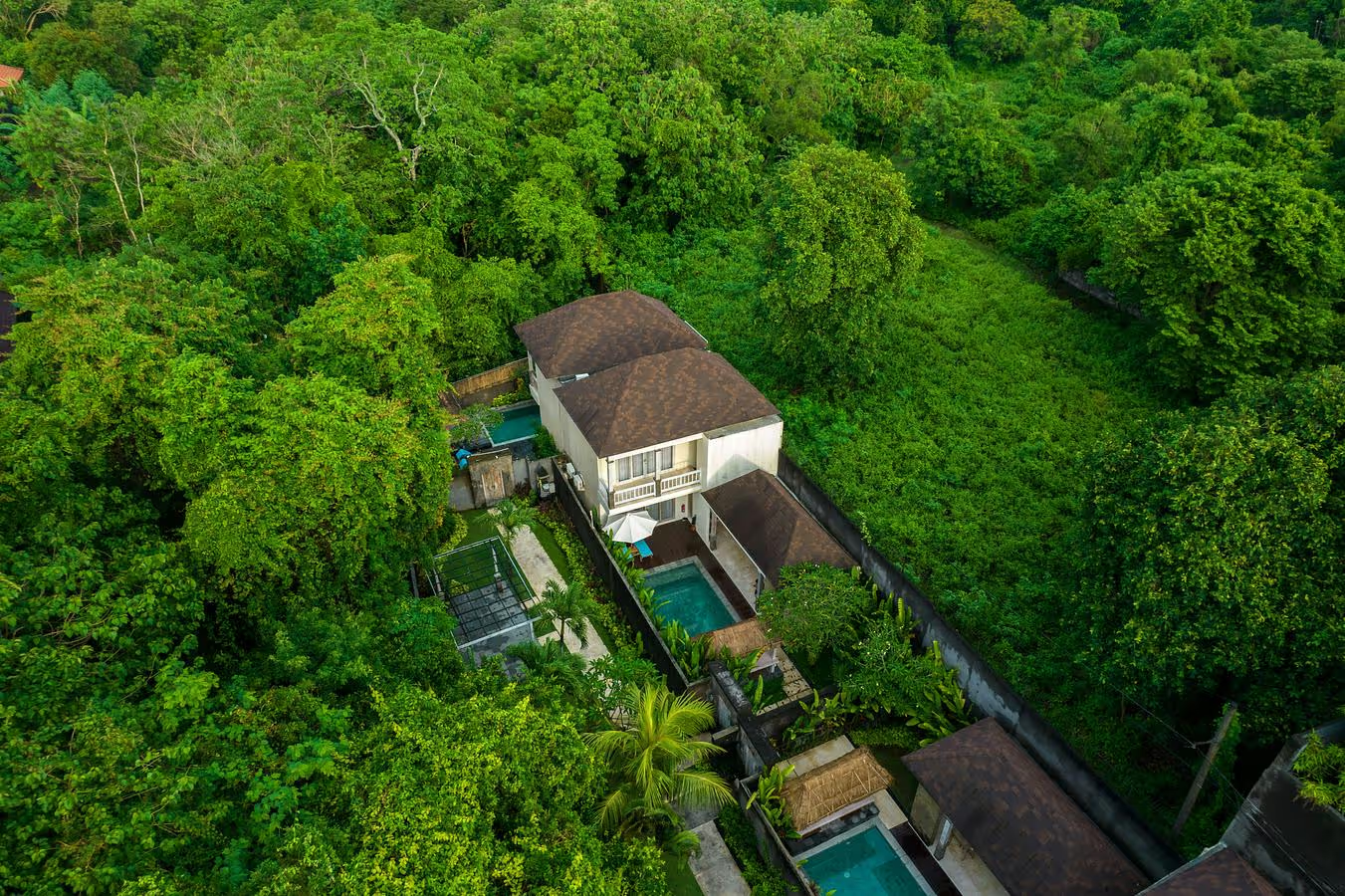
Bali's property market has evolved from a niche tropical escape into a serious global investment destination. Rental yields between 7–15%, steady tourism demand, and limited coastal land have drawn buyers from around the world—many of whom purchase remotely without ever setting foot on the island.
This guide covers the locations, property types, ownership structures, and step-by-step buying process you'll encounter when searching for villas, homes, and land across Bali.
Why Bali real estate attracts global investors
Bali's property market has shifted from a backpacker economy into a recognized global investment class. Rental yields typically range from 7–15% on short-term vacation properties, and demand for luxury villas and modern apartments continues to grow. Foreigners usually secure investments through leasehold agreements or by setting up a PT PMA, which is a foreign-owned Indonesian company that can hold land rights.
What draws people here goes beyond the numbers. The tropical lifestyle, year-round tourismWhat draws people here goes beyond the numbers. The tropical lifestyle, 6.94 million foreign visitors in 2025, and a growing community of remote workers create steady rental demand. Meanwhile, infrastructure improvements across southern Bali keep opening new areas for development, and limited coastal land supports long-term value in popular locations.
Best locations to buy property in Bali
Where you buy depends on what you want—beach access, cultural immersion, nightlife, or quiet surroundings. Each area has its own character, price range, and buyer profile.
Uluwatu and the Bukit Peninsula
Uluwatu sits on limestone cliffs above the Indian Ocean, known for world-class surf breaks and boutique beach clubs. The Bukit encompasses distinct pockets like Balangan, Bingin, and Nyang Nyang—each with its own character and price range. The atmosphere is quieter than central Bali, and development is accelerating. Land here remains more affordable than in saturated northern zones, which makes it attractive for buyers seeking capital growth alongside lifestyle.
Canggu and Pererenan
Canggu has become the go-to spot for digital nomads and expats. Cafes, coworking spaces, and a vibrant beach scene keep rental demand high. Pererenan, just north, offers a slightly calmer alternative while staying close to Canggu's amenities.
Seminyak, Umalas, and Kerobokan
Seminyak and its neighboring areas offer walkable streets, upscale dining, and a polished luxury scene. Buyers here often prioritize convenience and proximity to Bali's best restaurants and boutiques. Prices tend to be higher, reflecting the mature market.
Ubud and Central Bali
Ubud draws buyers who want cultural immersion—rice terraces, yoga retreats, and art galleries define the area. The pace is slower, and the community leans toward wellness and creativity. Properties here suit those who value atmosphere over beach proximity.
Sanur and East Bali
Sanur offers a quieter, family-friendly coastal vibe with a traditional village feel. The area appeals to long-term residents and retirees looking for calm surroundings and established local infrastructure.
Types of Bali villas, homes, and land for sale
Knowing what's available helps you narrow your search. Bali's market includes turnkey villas, traditional homes, raw land, and managed apartments—each suited to different goals.
Bali villas for sale
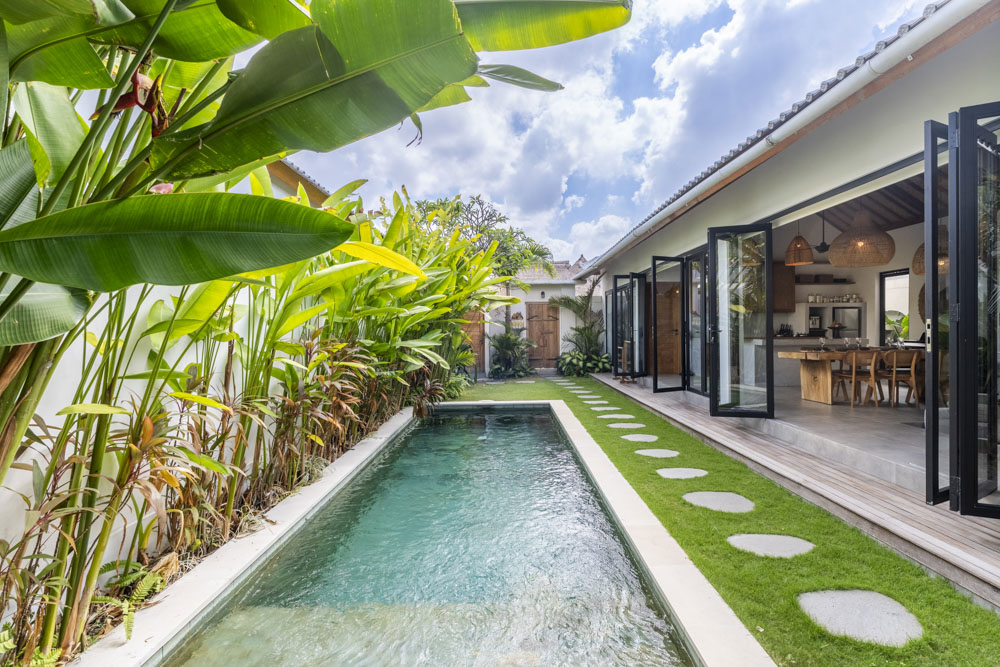
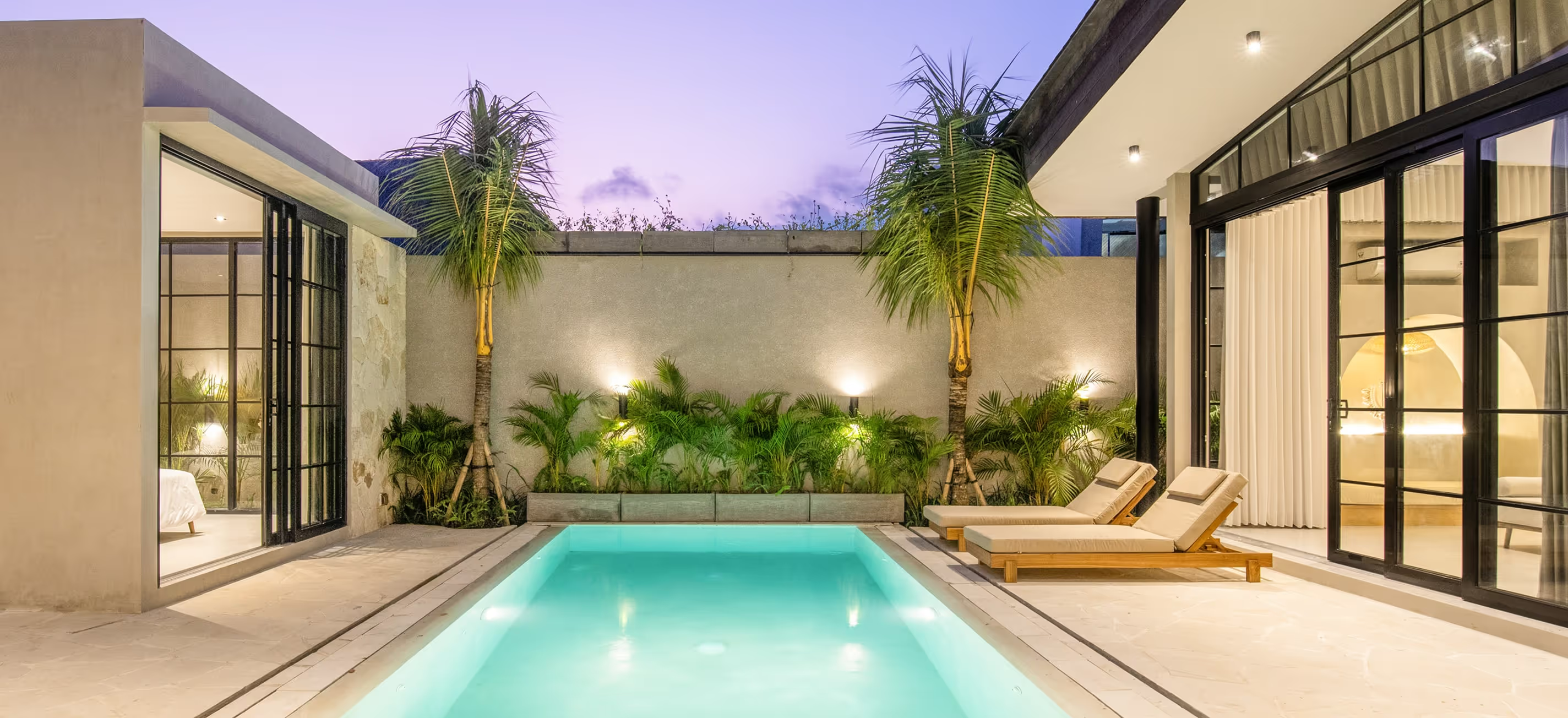
A "villa" in Bali typically means a standalone property with a private pool, open-air living spaces, and tropical landscaping. Many are designed for both personal use and rental income. You'll find completed homes ready to move into, as well as off-plan projects where you buy before construction finishes.
Common features include:
Balinese houses and traditional homes for sale
Traditional Balinese homes feature Joglo or Gladak structures—antique wooden frames with carved details and cultural architectural elements. Joglo refers to a Javanese-style peaked roof structure, while Gladak describes simpler traditional wooden buildings. Buyers drawn to authentic character and craftsmanship often prefer these over modern minimalist designs.
Bali land for sale
Buying land allows you to build a custom home or villa. Land in Bali is measured in "are," where one are equals 100 square meters. Zoning matters here: pink zoning permits tourism and commercial use, while green zoning restricts development to residential purposes only. Land purchases suit buyers with longer timelines and specific design visions.
Apartments and townhouses in Bali
Apartments and townhouses offer lower entry prices and often include shared amenities like pools, security, and maintenance. Buyers who prefer less hands-on management tend to gravitate toward managed complexes.
Commercial properties and villa complexes
For larger-scale investments, Bali's market includes hotels, villa complexes, and commercial spaces. These assets require more capital and operational planning but can generate significant returns for the right buyer.
How much does it cost to buy a home in Bali
Prices vary widely by location, property type, and ownership structure. Setting realistic expectations early helps you focus your search on what's actually within reach.
Villa prices by location
Villa prices differ dramatically between emerging areas and established zones. A three-bedroom villa in Uluwatu might start around USD 200,000 on leasehold, while a comparable property in Seminyak could exceed USD 400,000. The gap reflects land scarcity, rental track record, and buyer competition.
Land prices per are in Bali
In Uluwatu, you might find pink-zoned land for USD 8,000–15,000 per are. Prime Canggu plots can reach USD 30,000 or more per are. Road access, distance from popular beaches, and zoning all affect pricing.
Apartment and townhouse prices
Apartments offer more affordable entry points, often starting around USD 80,000–120,000. Management fees for shared facilities typically add USD 100–300 per month to ongoing costs.
How foreigners can buy property in Bali
Foreigners cannot own freehold land directly in Indonesia. However, legitimate pathways exist for controlling and investing in property here.
Leasehold rights for foreign buyers
Leasehold, known locally as Hak Sewa, is the most common path for foreigners. You sign a long-term rental agreement—typically 25–30 years—with extension optionsLeasehold, known locally as Hak Sewa, is the most common path for foreigners. You sign a long-term rental agreement—typically 25–30 years, extendable up to 60 years—with terms negotiated upfront. The lease is registered with a notary and provides clear legal standing. This structure works well for lifestyle buyers and rental investors who want straightforward ownership without corporate setup.
PT PMA company ownership
A PT PMA (Penanaman Modal Asing) is a foreign-owned Indonesian company that can hold land use rights. Through a PT PMA, you can obtain Hak Pakai (right to use) or Hak Guna Bangunan (right to build) titles. This structure suits serious investors wanting stronger control and the ability to operate rental businesses legally. Setting up a PT PMA requires minimum paid-up capital of around USD 70,000 and ongoing compliance with Indonesian regulations.
Nominee arrangements and why to avoid them
Some buyers consider using an Indonesian citizen's name to hold freehold title—a "nominee" arrangement. This approach carries significant legal risk. Contracts are unenforceable under Indonesian law, and you could lose your entire investment if the nominee decides not to cooperate. We recommend legitimate structures only.
Leasehold vs freehold property in Bali
Understanding the practical differences between leasehold and freehold helps you match ownership structure to your goals.
How leasehold works
You pay an upfront sum for the right to use the property for a set period. Extensions are typically negotiated at signing or during the lease term. When the lease ends, the property reverts to the landowner unless you've secured an extension beforehand.
How freehold works
Freehold, called Hak Milik in Indonesian, means full ownership. It's available only to Indonesian citizens. Foreigners can access freehold benefits through a PT PMA holding Hak Guna Bangunan, or through marriage to an Indonesian spouse with a prenuptial agreement in place.
Which ownership structure fits your goals
Leasehold works well for medium-term lifestyle use or rental income—you get clear rights without corporate complexity. PT PMA freehold suits long-term business planning or legacy investments where you want stronger control and the ability to pass assets to heirs. We help buyers evaluate which path fits their situation.
Bali real estate trends and market outlook
Bali's property market continues to attract global attention. Several factors drive current demand:
Uluwatu and the Bukit PeninsulaUluwatu and the Bukit Peninsula are experiencing particularly strong interest as buyers seek alternatives to saturated areas like Canggu and Seminyak.
How to buy property in Bali step by step
The buying process typically takes 30–60 days once you've selected a property. Here's what to expect at each stage.
1. Define your budget and investment goals
Start by clarifying your intent—personal use, rental income, capital appreciation, or some combination. This shapes your location choice, property type, and ownership structure.
2. Choose your location and property type
Shortlist areas based on lifestyle preferences and investment criteria. We provide location consultations to match buyers with suitable properties across Uluwatu and Bali's key areas.
3. Conduct due diligence on title and permits
Before committing, verify the title certificate, confirm zoning, check building permits (IMB or PBG), ensure tax clearance, and confirm road access rights. IMB stands for Izin Mendirikan Bangunan, the building permit. We conduct full due diligence and provide clear reports before you sign anything.
Tip: Never rely on informal advice or verbal assurances. Hire local legal counsel and a notary (PPAT) to verify all documents independently.
4. Sign agreements and transfer funds
The typical sequence includes a reservation agreement followed by a notarized lease or sale agreement. A PPAT (Pejabat Pembuat Akta Tanah) is the authorized land deed official who formalizes transactions in Indonesia.
5. Complete registration and take ownership
Final steps include registration with the land office and handover of keys and documents. Timeline from signed agreement to completion is usually two to four weeks.
Find your Bali property with Uluwatu Property
We help buyers and investors find villas, land, and homes across Uluwatu and Bali's most desirable locations. Every listing is handpicked for design, comfort, and investment potential. Our team provides on-the-ground expertise, full due diligence, and legal support through Uluwatu Advisory—including remote buying assistance with video walkthroughs and regular updates.
Contact us to start your property search or browse our curated listings.
FAQs about buying real estate in Bali
How long does it take to buy property in Bali?
Most transactions complete within 30–60 days from property selection. The timeline depends on due diligence complexity and document preparation.
What taxes and fees apply when buying property in Bali?
Key costs include acquisition tax (BPHTB, typically 5% of transaction value) and notary and legal fees (1–2%). The seller usually pays income tax (PPh, 2.5%). After purchase, you'll pay annual land tax (PBB).
Can foreigners buy property in Bali without visiting Indonesia?
Yes. Remote purchase is possible with proper legal support, video walkthroughs, and power of attorney arrangements. We keep you updated at every step.
What is the minimum lease term for property in Bali?
Typical lease terms range from 25–30 years. Shorter or longer terms are negotiable depending on the property and seller.
How can foreigners earn rental income from Bali property?
Operating a rental typically requires proper licensing. You can manage this through a PT PMA or partner with a licensed rental management company.
What happens when a leasehold expires in Bali?
The property reverts to the landowner unless you've negotiated an extension. Extensions are typically agreed in advance or during the lease term.

.avif)
