
.svg)

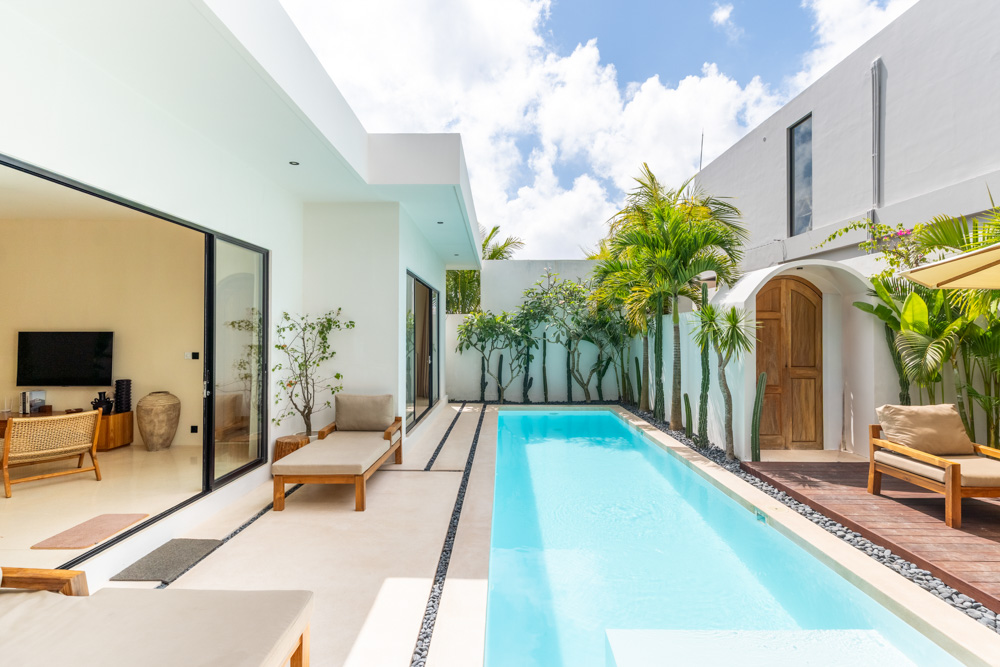
Your Strategy Roadmap Starts Here. If you are a foreign investor weighing Bali real estate — whether you are based in Australia, Singapore, Europe, or North America — this guide breaks down the four main investment strategies, the legal structures available to you, and the real costs behind each path. By the end, you will know which approach matches your budget, timeline, and exit plan.
Key Takeaways
- Bali's property market offers 8--10% net rental yields backed by 7+ million annual tourist arrivals, but returns vary dramatically by strategy.
- Buy-to-rent villas generate the most consistent income; off-plan purchases offer the highest upside but carry construction and timing risk.
- Foreigners can invest through leasehold, Hak Pakai, or PT PMA (foreign-owned limited liability company) — each structure suits a different budget, timeline, and exit plan.
- Location matters more than property type: Uluwatu and Pererenan are outperforming saturated Canggu on a yield-per-dollar basis.
- Every strategy needs an exit plan — and most Bali investment guides fail to mention that resale liquidity depends entirely on your ownership structure.
Why Bali Property Still Attracts Serious Capital
A Market Backed by Numbers. Bali is not a speculative frontier — it is a maturing investment destination with hard data behind the demand. If you are evaluating where to deploy $120K--$500K in real estate, here is why the island continues to draw serious capital in 2026.
Tourism is the engine. Bali welcomed over 7 million foreign tourists in 2025, with visitors spending USD 10.1 billion across the island (Governor of Bali data). Between January and May 2025 alone, the island recorded 2.64 million international arrivals, up 9% year-over-year (BPS-Statistics Indonesia). That demand sustains occupancy and short-term rental revenue across prime zones.
Property prices are climbing steadily. Bank Indonesia reported a 1.08% increase in Q3 2025 — a measured rise, not a spike, which is what long-hold investors want. Premium areas like Uluwatu and Pererenan have appreciated faster than the island-wide average due to limited land supply and growing infrastructure.
Digital nomads and long-stay visitors are adding a structural shift. Bali's remote-work ecosystem has created a year-round occupancy base that did not exist five years ago, reducing the seasonal volatility that once made rental income unpredictable.
An honest caveat: the market is maturing, not booming without limits. Oversupply is emerging in some zones, particularly the Canggu corridor. Choosing the right location and strategy matters more than it did in 2019.
Four Bali Property Investment Strategies Compared
Match Your Capital to a Clear Plan. Not every Bali property deal is the same kind of bet. Below are four distinct strategies — buy-to-rent, off-plan purchase, land banking, and long-term leasehold hold — each with different capital requirements, return profiles, timelines, and risk levels. Your job is to pick the one that aligns with how much you have, how long you can wait, and what kind of return you need.
Strategy 1 — Buy-to-Rent (Villa Rental Income)
Consistent Cash Flow, Proven Model. This is the most popular strategy for foreign investors who want income from day one. You purchase a completed, rental-ready villa in a high-demand zone and earn returns through short-term or medium-term rentals.
Capital required: $180K--$350K for a ready villa in a prime location such as Uluwatu, Pererenan, or Seminyak. The lower end gets you a two-bedroom villa; the upper range covers three- to four-bedroom properties with pools and premium finishes.
Net yield: 8--10% after property management fees (10--25% of gross revenue), OTA commissions (15--20%), and operating costs. You may see "15% yield" advertised elsewhere — that figure is almost always gross, not net. Once you subtract all costs, the real number lands at 8--10% for well-managed properties.
Occupancy benchmarks: Bali's average hotel and villa occupancy in 2025 ranged from 59% to 64.7%. Top-performing villas with strong listings, professional photography, and responsive management consistently exceed 70%.
Best locations: Uluwatu offers premium cliff-side properties with strong surf tourism and wellness demand. Pererenan delivers a quieter alternative to Canggu with growing visitor traffic. Seminyak remains a reliable performer for shorter-stay guests.
Primary risks: Occupancy can fluctuate with travel trends, global events, or new competing supply. Your return is directly tied to the quality of your property management — a poor manager can cut your yield in half.
Strategy 2 — Off-Plan Purchase
Lower Entry, Higher Upside. Off-plan means purchasing a property before or during construction, typically at 10--30% below the completed market value. You pay in instalments as the build progresses, reducing your upfront capital commitment.
Capital required: $120K--$200K entry, paid in staged instalments across 12--24 months of construction. This makes it the most accessible strategy for investors who want villa ownership but cannot deploy $250K+ immediately.
Potential return: If the developer delivers on time and the market holds, you gain instant equity when the property completes — the gap between your purchase price and the finished market value. Some investors flip at completion; others hold for rental income.
Timeline: 12--24 months from purchase to handover, depending on project scale and developer efficiency.
Primary risks: Developer reliability is the single biggest variable. Construction delays, cost overruns, and — in worst cases — developer insolvency can erode or eliminate your return. Market conditions may also shift during the build period.
Due diligence checklist: Before committing, verify the developer's track record (completed projects, not just renders), confirm all building permits are in place — IMB or the newer PBG (building permits required by Indonesian law) — and insist on an escrow arrangement so your funds are released to the developer only at construction milestones, not upfront.
Strategy 3 — Land Banking
Patience Rewarded, No Income During the Wait. Land banking means purchasing undeveloped land in emerging growth corridors and holding it for capital appreciation over three to seven years. This is a pure capital-gains play with no rental income during the hold period.
Capital required: $30K--$100K for land plots in areas like Tabanan or the northern stretches of Uluwatu, where infrastructure development is expanding but prices have not yet caught up to established zones.
Potential return: Highest capital appreciation among all four strategies in the right location. Emerging areas in Bali have seen land values double or more over five- to seven-year periods as roads, amenities, and tourism infrastructure arrive.
Timeline: 3--7 years. This is not a short-term play.
Primary risks: Zoning changes can restrict what you build. Infrastructure projects may stall or reroute. You earn zero income while holding. And land title verification is critical — you need to confirm whether the certificate is SHM (freehold certificate, strongest title) or HGB (building rights certificate, time-limited) and ensure the land is properly zoned for your intended use.
Requires: Strong local knowledge, trusted legal counsel, and thorough due diligence on title, zoning, and access rights.
Strategy 4 — Long-Term Leasehold Hold
Your Bali Base with Moderate Returns. This strategy is best for expats, semi-retirees, and frequent visitors who want a personal residence in Bali that also generates rental income when they are not using it.
Capital required: $150K--$300K for a 25--30 year leasehold on a quality villa in an established area.
Return profile: A combination of personal use value, moderate capital appreciation during the early lease years, and rental income during periods when you are not occupying the property. This is a lifestyle-first strategy with investment upside, not a pure yield play.
Best for: Investors who plan to spend significant time in Bali and want a home base rather than a purely financial asset.
Key consideration: Leasehold value depreciates as the remaining term shortens. A 25-year lease is worth significantly more than a 10-year lease, even for the same property. Renewal terms and conditions matter — negotiate these upfront and have them documented clearly.
Exit: Resale depends on remaining lease years. The best resale window is typically the first 10--15 years. After that, the declining term makes the property harder to sell at a strong price.
How Foreigners Own Property in Bali — Three Legal Paths
Know Your Ownership Options. Indonesian law does not allow foreigners to hold freehold land title. Instead, you have three legal pathways to property ownership, each with different costs, timelines, and levels of control. Your choice here should be driven by your investment strategy and exit plan.
Leasehold (Hak Sewa): The simplest and lowest-cost structure. You lease the property for 25--30 years under a notarized agreement. No company formation is required. This works well for lifestyle buyers and investors who want straightforward entry and are comfortable with a fixed-term asset. The downside: you do not own the underlying land or structure, and your rights are contractual rather than title-based.
Hak Pakai (Right to Use): Available to foreign individuals for residential use. Grants 30 years of use rights with a 20-year extension option, registered directly in your name at the land office. This provides stronger legal standing than a simple lease and is suitable for investors who want a longer horizon and personal-name ownership. The property must be used for residential purposes — not commercial rental operations — though enforcement and interpretation vary.
PT PMA (Foreign-Owned Limited Liability Company): The most powerful structure. By establishing a PT PMA, you can hold HGB (building rights certificate) title, giving you the most control over the property and the broadest range of permitted uses including commercial rental. The trade-off: minimum registered capital of IDR 10 billion (approximately $615,000 USD), with a paid-up minimum of roughly $154,000 USD, plus ongoing corporate compliance costs.
A note on nominee arrangements: Some agents suggest using an Indonesian nominee to hold freehold title on your behalf. These arrangements exist but carry significant legal risk — Indonesian courts have invalidated nominee agreements, leaving the foreign investor with no enforceable claim. We recommend against this structure.
Key tax rates to budget for: BPHTB (property acquisition tax) at 5% of the transaction value, PPh (income tax on sale) at 2.5% of the sale price paid by the seller, and PBB (annual land and building tax) at 0.1--0.3% of the assessed value.
The Costs Nobody Tells You About
Budget Beyond the Purchase Price. The sticker price on a Bali property listing is just the starting point. Here is what the full cost picture looks like — and why you should budget purchase price plus 8--12% in year-one fees and setup costs.
Acquisition costs: BPHTB (property acquisition tax) at 5% of the declared transaction value is your largest upfront fee. Add notary and legal fees at 1--2% of the purchase price, plus due diligence costs for title verification, zoning confirmation, and permit checks.
Annual holding costs: PBB (annual land and building tax) runs 0.1--0.3% of the government-assessed value. If you are renting the property, property management fees range from 10--25% of gross rental revenue depending on service level. Budget separately for maintenance (pool, garden, AC servicing, general repairs) and insurance.
Selling costs: When you exit, PPh (income tax on sale) applies at 2.5% of the sale value. Agent commissions typically run 3--5% if you use a broker.
PT PMA-specific ongoing costs: Annual accounting and corporate tax filings are mandatory. You will need a registered office address and ongoing compliance with Indonesian corporate law. Budget $2,000--$5,000 per year for these obligations.
Total year-one cost model: For a $250K villa purchase, expect to spend an additional $20K--$30K (8--12%) in acquisition costs, legal fees, and setup expenses before you collect your first rental payment.
Where to Invest — Location Strategy for 2026
Pick the Zone That Matches Your Strategy. Location is the single most important variable in your Bali investment return. Here is how the key areas stack up for 2026.
Uluwatu: Premium yields, cliff-side property premiums, and strong demand from surf tourism and the growing wellness sector. Uluwatu offers less saturation than Canggu, better land value relative to rental returns, and a tighter supply of quality villas. If you are pursuing buy-to-rent or a long-term leasehold hold, Uluwatu is the strongest risk-adjusted choice right now.
Canggu and Pererenan: The highest raw demand for short-term rentals, driven by digital nomads and lifestyle visitors. However, emerging oversupply — particularly in the two- to three-bedroom villa segment — is compressing yields. Canggu still works for buy-to-rent if you have strong management and a differentiated property, but the margin for error is thinner than it was two years ago. Pererenan, slightly north, offers better value with similar demand drivers.
Emerging areas — Tabanan and East Bali: Lowest entry cost and the best potential for capital appreciation through land banking. Infrastructure development is underway but uneven. Higher risk, longer timeline, and no meaningful rental income until the area matures. Suitable for patient investors with strong local advisors.
The match: Buy-to-rent investors should target established zones with proven rental demand. Land bankers should look at growth corridors where infrastructure spending is committed but prices have not yet adjusted.
Plan Your Exit Before You Buy
Your Exit Determines Your Structure. Most investors focus on getting into a deal. The ones who profit focus equally on how they will get out. In Bali, your exit options depend almost entirely on the ownership structure you chose at purchase.
Leasehold resale: Value declines as the remaining term shortens. A villa with 25 years left is a compelling purchase; the same villa with 8 years left is a hard sell. The best resale window is the first 10--15 years. Plan to exit — or renegotiate your extension — before the term drops below the threshold where buyers lose interest.
PT PMA exit: You have two clean options. Sell the shares in your PT PMA company to the buyer (the property stays in the company, and ownership transfers via share sale — faster, simpler, and avoids a new acquisition tax event). Or sell the property itself out of the company and dissolve the PT PMA, which is more complex and triggers acquisition tax for the buyer.
Capital gains treatment: Indonesia does not impose a separate capital gains tax on property sales for individuals. The seller pays PPh at 2.5% of the sale value. PT PMA entities follow corporate tax rules, but the 2.5% final tax on property sales generally applies.
Liquidity reality: Bali is less liquid than Sydney, Singapore, or London. A well-priced property in a prime zone may take 3--6 months to sell. An overpriced property or one with a short remaining lease may sit for a year or more.
The principle: Your exit strategy should determine your ownership structure, not the other way around. If you plan to sell within 10 years, leasehold may be sufficient. If you want maximum flexibility, PT PMA gives you the most options — at a higher cost of entry and maintenance.
Frequently Asked Questions
How much money do I need to invest in Bali property?
Entry starts at $30K--$70K for land plots in emerging areas. Off-plan villas begin at $120K--$160K with instalment payments during construction. Ready-to-rent villas with established rental history start at $180K and range up to $350K+ in premium zones like Uluwatu and Seminyak.
What is the average ROI on Bali villa investment?
Net rental yield is typically 8--10% after all costs. Combined with 4--6% annual capital appreciation in prime locations, total returns reach 12--16% per year. These figures assume competent management and a well-located property — poorly managed villas in oversupplied zones will underperform.
Can foreigners buy freehold property in Bali?
No. Indonesian law reserves freehold title (SHM) for Indonesian citizens. You use leasehold (Hak Sewa), Hak Pakai (Right to Use), or a PT PMA to hold HGB title. Each structure has different cost, control, and exit implications detailed above.
Is Bali property a safe investment in 2026?
The market is growing but maturing. Tourism remains strong at 7+ million annual arrivals, and rental demand is supported by tourists and long-stay remote workers. However, oversupply is emerging in zones like Canggu. Success requires the right location, strategy, and ownership structure — it is not a market where you can buy anything and expect to profit.
What are the tax implications of owning property in Bali?
Key taxes include BPHTB (property acquisition tax) at 5% of the transaction value, PPh (income tax on sale) at 2.5% of the sale price, and PBB (annual land and building tax) at 0.1--0.3%. If you own through a PT PMA, you also face corporate tax filing obligations and annual compliance costs. Budget these into your return calculations from the start — they are not optional, and they reduce your net yield.
Choosing the right Bali investment strategy is not about finding the "best" deal — it is about matching your capital, timeline, risk tolerance, and exit plan to the structure that delivers the return you need. Whether you are drawn to the consistent cash flow of buy-to-rent, the upside of off-plan, or the long-game appreciation of land banking, the approach that works is the one built around your goals, not someone else's success story. At Uluwatu Property, we help investors navigate exactly this decision — matching you with the right strategy, location, and ownership structure so your Bali investment works as hard as you planned it to.



.avif)
