
.svg)

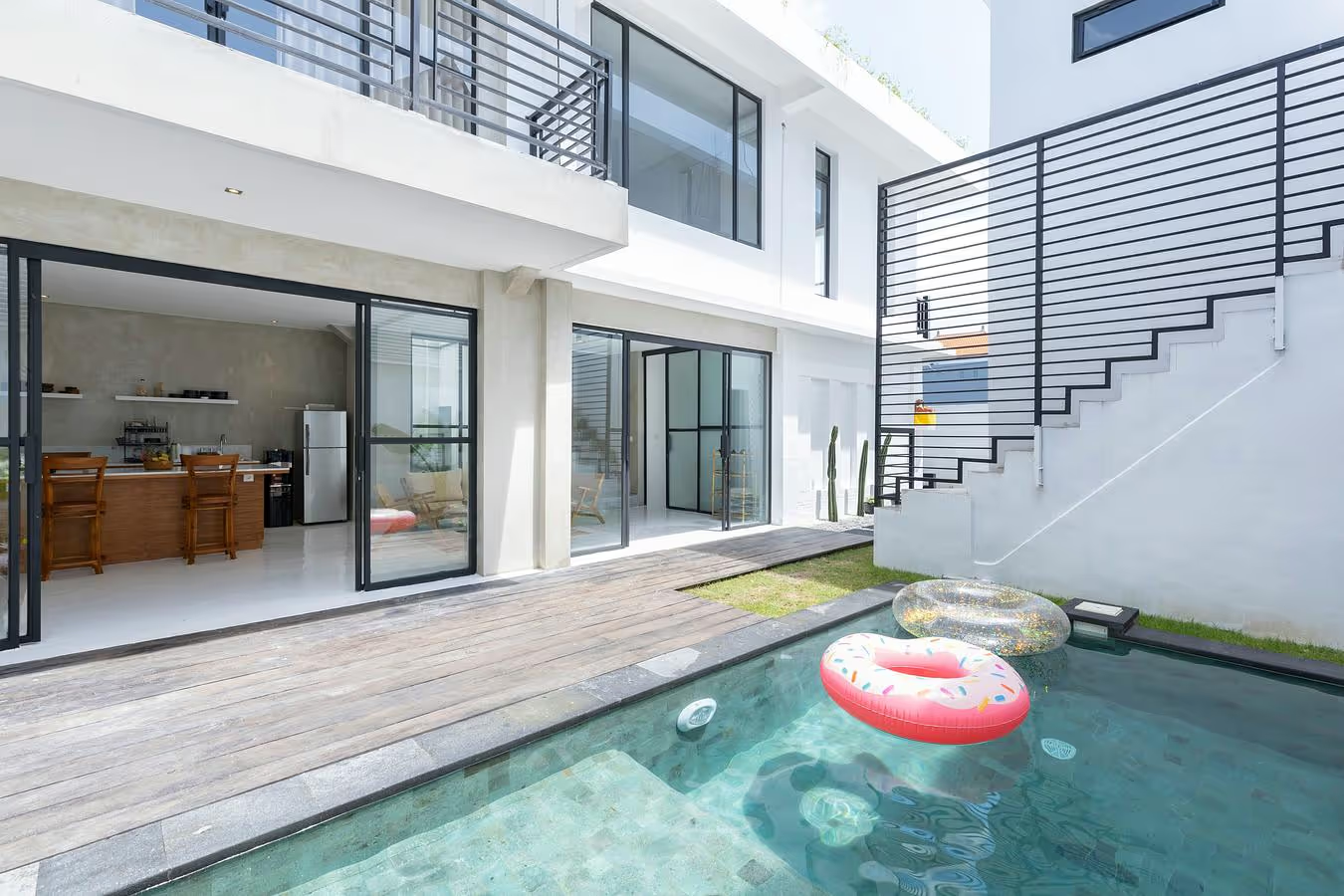
Bali property delivers what most investment markets can't: rental yields between 8% and 15% annually, steady land appreciation in a supply-constrained market, and a lifestyle asset you can actually use. The combination explains why foreign buyers keep entering despite the legal complexity.
This guide covers ownership structures, location comparisons, the full buying process, and the costs you'll encounter—everything you need to evaluate whether Bali investment property fits your goals.
Why invest in Bali real estate
Bali property investment works because the island combines limited land supply with consistent tourism demand. Rental yields on well-located villas typically fall between 8% and 15% annually, while land values in prime coastal areas have grown steadily over the past decade. For buyers looking at lifestyle homes, rental income, or long-term appreciation, Bali offers a rare combination of all three.
Strong tourism demand driving rental income
Bali draws nearly 7 million foreign visitors each year, and that flow has become more diverse. Beyond traditional holidaymakers, you now have digital nomads booking villas for months at a time and remote workers treating the island as a seasonal base.
This shift matters for investors. Longer stays mean more consistent occupancy outside peak seasons like July, August, and the December holidays. Areas popular with the remote work crowd—Canggu, Pererenan, and increasingly Uluwatu—benefit most from this trend.
High rental yields and capital appreciation
Rental yield is simply your annual rental income divided by what you paid for the property. In Bali, gross yields of 10% to 15% are realistic in prime locations with professional management. Compare that to the 3% to 5% common in most Western markets.
Then there's appreciation. Bali is a small island with strict zoning rules, and developable coastal land gets scarcer each year. Properties in established areas have seen land values climb substantially over five to ten year periods, though exact figures vary by location and timing.
Infrastructure projects expanding market potential
New roads, ports, and transit projects are changing how people move around the island. The $20 billion Bali Urban Subway, Gilimanuk-Mengwi Toll Road, and Sanur Special Economic Zone are all in development.
What does this mean for investors? Areas that once felt remote become accessible. Properties near new infrastructure often see value increases before and after completion. Timing your purchase around development stages can make a meaningful difference.
Lifestyle and investment value combined
One of Bali's distinct advantages is the ability to use your property personally while generating rental income when you're away. Many buyers spend a few months each year in their villa and rent it out the rest of the time.
This dual-purpose approach works especially well with properties designed for the rental market—villas with pools, ocean views, and modern amenities that appeal to both owners and guests.
Can foreigners buy property in Bali
Indonesian law does not allow foreigners to own freehold land directly. However, two legal pathways make property investment accessible: leasehold agreements and ownership through a PT PMA company.
Leasehold is simpler and more common. PT PMA ownership suits investors planning larger portfolios or commercial ventures. Both structures are widely used and legally recognized when properly documented.
Leasehold vs freehold ownership in Bali
The ownership structure you choose affects your rights, costs, and flexibility. Here's how the two main options compare:
How leasehold works for foreign buyers
Leasehold, called Hak Sewa locally, is a long-term rental agreement registered with a notary. You pay the full lease amount upfront and receive exclusive rights to use and profit from the property for the agreed term—typically 25 to 30 years.
Extension options are usually negotiated at purchase and documented in the lease agreement. This means you can secure renewal rights for an additional 20 to 30 years before your initial term even begins. The lease can also be sold or transferred to another buyer for the remaining term.
Accessing freehold through PT PMA
A PT PMA (Penanaman Modal Asing) is a foreign-owned limited liability company registered in Indonesia. Through this structure, you can hold Hak Guna Bangunan (HGB)—a right to build on and use land for 30 years, renewable for up to 80 years total.
Setting up a PT PMA requires a minimum capital of IDR 2.5 billion and ongoing compliance obligations including annual reporting. This path makes sense for investors planning multiple properties or commercial developments.
Best locations for Bali property investment
Location shapes everything from rental yield to appreciation potential. Each area attracts different visitor profiles and offers distinct investment characteristics.
Uluwatu and the Bukit Peninsula
The Bukit Peninsula offers dramatic cliff-top settings, world-class surf breaks, and lower land prices than Canggu or Seminyak. Limited remaining land supply in areas like Bingin, Balangan, and Nyang Nyang suggests strong appreciation potential.
We specialize in this region and can guide you toward Uluwatu investment properties positioned for both lifestyle enjoyment and strong returns.
Canggu and Pererenan
Canggu has become the island's digital nomad hub, with cafes, coworking spaces, and a young international community driving consistent rental demand. Properties here command higher purchase prices but often achieve strong occupancy rates year-round.
Pererenan, just north of Canggu, offers a slightly quieter atmosphere while still benefiting from the area's popularity.
Emerging investment areas
For investors seeking lower entry prices and higher appreciation potential:
- Tabanan: Coastal areas west of Canggu with growing surf tourism
- Mengwi: Benefiting from new toll road access and lower land costs
- Nusa Islands: Limited supply and island lifestyle appeal, though infrastructure remains basic
Bali property types for investment
The type of property you choose affects your returns, management requirements, and exit options.
Villas for short-term rental income
Villas remain the most popular investment vehicle in Bali. A well-designed two to four bedroom villa in a prime location can generate strong rental income while also serving as a personal residence during your visits.
Key factors affecting rental performance include pool quality, ocean views or beach proximity, modern design, and professional photography.
Off-plan developments
Purchasing off-plan means buying before construction completes, usually at 10% to 20% below projected finished value. Payment is typically structured in installments tied to construction milestones.
The trade-off involves risk: construction delays, developer reliability, and the possibility that the final product differs from plans. Working with established developers who have completed previous projects helps reduce this risk.
Land banking opportunities
Land banking involves purchasing undeveloped plots for future appreciation or development. This strategy requires patience—you won't generate rental income—but can deliver substantial returns in high-growth areas.
Foreigners cannot hold land directly, so you'll need either a PT PMA structure or a carefully documented arrangement. Zoning verification is critical, as only certain land classifications permit villa or commercial development.
How to buy property in Bali
The buying process typically takes 30 to 60 days from signed agreement to completion.
1. Define your investment goals and budget
Before viewing properties, clarify what you're trying to achieve. Are you prioritizing rental income, capital appreciation, personal use, or some combination? Your answer shapes which locations and property types make sense.
Budget planning goes beyond the purchase price. Expect to add 8% to 12% for acquisition costs including taxes, legal fees, and notary charges.
2. Choose your location and property type
If you can visit Bali, spending time in different areas helps you understand each neighborhood's character. For remote buyers, we provide detailed video tours and area briefings.
3. Conduct due diligence and verify title
Due diligence includes verifying the title certificate, confirming zoning permits development, checking building permits, and ensuring all taxes are current. We conduct comprehensive due diligence and provide a clear written report before you sign any binding agreements.
4. Sign agreements and transfer payment
Once due diligence is complete, you'll sign a sale and purchase agreement outlining terms, payment schedule, and conditions. Funds are typically held in escrow until all conditions are satisfied.
5. Complete registration and take ownership
A notary (PPAT) registers the transaction with the land office. For leasehold purchases, this process usually completes within two to four weeks.
Costs and taxes when buying Bali property
Legal and notary fees
Every property transaction in Indonesia requires a notary (PPAT) to register the transfer. Legal fees cover contract review, due diligence, and registration. We connect buyers with experienced legal partners through Uluwatu Advisory.
Acquisition tax and transfer costs
BPHTB (Bea Perolehan Hak atas Tanah dan Bangunan) is the acquisition tax paid by buyers, calculated at 5% of the government-assessed value—typically lower than the actual transaction price. PPh (Pajak Penghasilan) is the seller's income tax, though it's often factored into negotiations.
Annual property tax and ongoing expenses
PBB (Pajak Bumi dan Bangunan) is the annual land and building tax. Other ongoing costs include property management (typically 15% to 25% of rental income), maintenance, insurance, and any community fees.
Due diligence checklist for Bali real estate
Thorough due diligence protects your investment. Here's what we verify:
- Title certificate verification: Confirm the certificate is legitimate, matches the seller's claims, and has no encumbrances or disputes
- Zoning confirmation: Verify the land is zoned appropriately—yellow for residential, pink for tourism/commercial
- Building permits: Check for valid IMB/PBG (building permit) and SLF (occupancy certificate)
- Tax clearance: Confirm all property taxes are current before transfer
- Road access: Verify legal road access rights
How to buy Bali investment property remotely
Many of our clients complete purchases without visiting Bali. Remote purchasing involves video property tours, digital document signing, and power of attorney arrangements that allow your legal representative to act on your behalf.
We provide regular updates throughout the transaction, including video walkthroughs at key stages. Geographic distance doesn't prevent you from investing in Bali real estate.
Start your Bali property investment
Finding the right property involves navigating unfamiliar legal structures and evaluating locations you may not know well. We guide buyers through every step—from initial discovery through due diligence, legal coordination, and transaction completion.
Contact us to discuss your investment goals and explore curated properties across Bali's most desirable locations.
FAQs about Bali investment property
What happens when my leasehold expires in Bali?
Lease extensions are typically negotiated and documented at purchase, allowing you to secure renewal rights for additional terms before your initial lease ends.
How long does the property buying process take in Bali?
Most transactions complete within 30 to 60 days from signed agreement. Off-plan purchases follow construction timelines that may extend 12 to 24 months.
Can foreigners get financing for Bali property purchases?
Indonesian banks generally do not offer mortgages to foreigners. Most international buyers pay cash or arrange financing through banks in their home country.
What are the risks of buying off-plan property in Bali?
Primary risks include construction delays and developer reliability. You can reduce risk by choosing established developers and using escrow payment structures tied to construction milestones.
Do I need to visit Bali to complete a property purchase?
No—remote purchases are common using video tours, digital documentation, and power of attorney arrangements.
What visa do I need to own property in Bali?
Property ownership does not require a specific visa. Investors who establish a PT PMA company often obtain an Investor KITAS to facilitate longer stays.




.avif)
